Miniature odorous frog with an oversized tympanum discovered in southern Vietnam
GA, UNITED STATES, October 27, 2026 /EINPresswire.com/ -- Researchers have described Odorrana chumu sp. nov., a
Press Release Disclaimer: This is a press release distributed through the XPR Media network. It has not been independently verified by our newsroom.
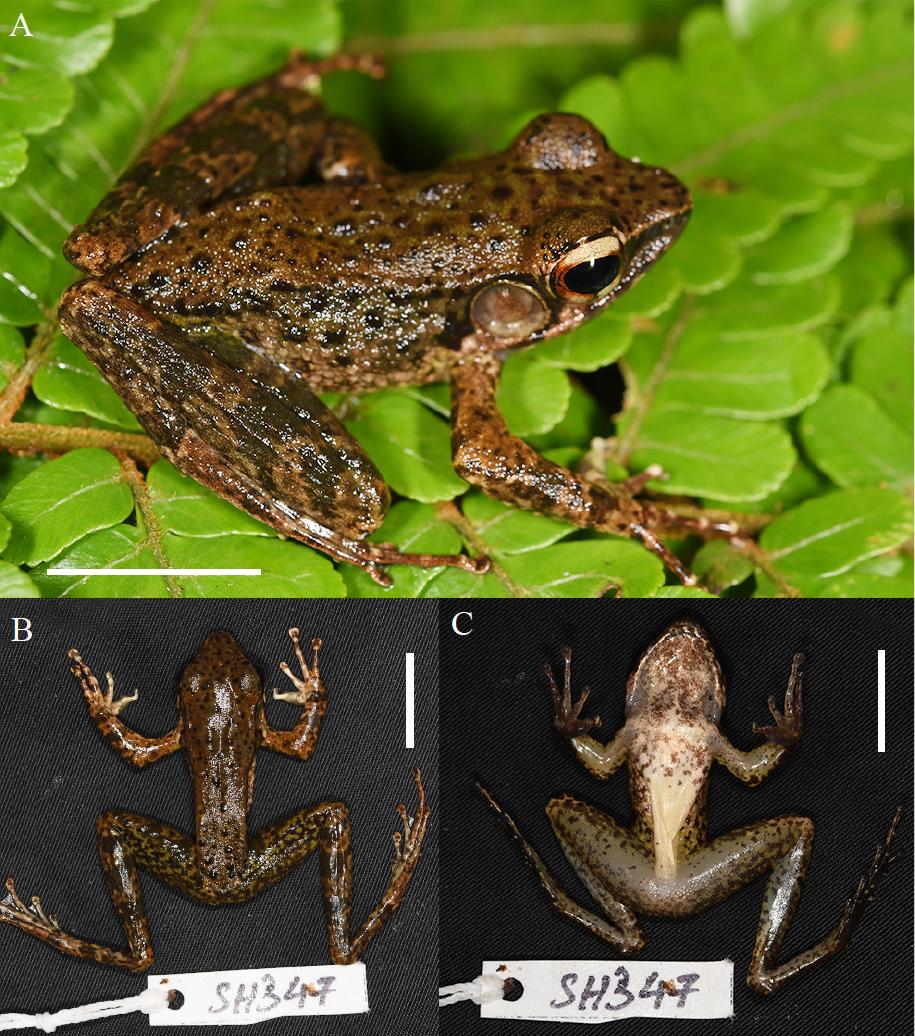

GA, UNITED STATES, October 27, 2026 /EINPresswire.com/ — Researchers have described Odorrana chumu sp. nov., a miniature odorous frog from the Langbian Plateau in southern Vietnam, using integrated morphological and molecular evidence. Adult males measure 29.1–31.8 mm in snout–vent length (SVL), with a mean of 30.2 ± 0.89 mm, the smallest mean among the 71 recognized Odorrana species. The frog also has a greatly enlarged tympanum, with a tympanum diameter/eye diameter (TD/ED) ratio of 0.81 ± 0.07. Phylogenetic analysis of mitochondrial 16S ribosomal RNA (16S rRNA) places it in the O. montivaga group and provides the first molecular data for O. montivaga. The discovery highlights underestimated amphibian diversity and endemism on the Langbian Plateau and supports conservation assessment.
The genus Odorrana comprises 71 species distributed from India across Southeast Asia to southern China and Japan. Its broad range, frequent sympatry, and cryptic diversity have created persistent taxonomic challenges, and new species continue to be described. The O. montivaga group is a poorly known assemblage from the Annamite Mountains of Laos and Vietnam, and its diversity in southern Indochina remains largely unexplored. Recent work has also clarified that Odorrana gigatympana is a junior synonym of O. absita, underscoring how morphological similarity can obscure species boundaries. Given these challenges, in-depth research is needed on the O. montivaga group across southern Indochina.
Researchers from the Kunming Institute of Zoology, Chinese Academy of Sciences; the Vietnam Academy of Science and Technology; the Australian Museum; the University of New South Wales; and the North Carolina Museum of Natural Sciences described the species. The study was published (DOI: 10.3724/ahr.2095-0357.2026.0048) online on 15 October 2026 in Asian Herpetological Research. The team collected six adult males in Dak Lak Province, compared their morphology with congeners, and analyzed mitochondrial 16S ribosomal RNA (16S rRNA) sequences. They also generated the first molecular sequences for O. montivaga.
The new species is diagnosable by its very small body, head longer than wide, distinct dorsolateral fold, vomerine teeth, bilobate subgular vocal sac, and distinctive bicolored iris with a coppery horizontal band. Its tympanum is unusually large and close to the eye, with a tympanum–eye distance of 0.5 ± 0.11 mm. The diagnosis also includes finger length III > IV > II > I, no webbing between fingers, toes webbed with formula I0–0II0–0III0–1IV1–0V, and a distinct nuptial pad on finger I. Principal component analysis (PCA) of 22 morphological characters separated adult males from O. absita, O. montivaga, and O. khalam; the first two principal components explained 52.9% of total variation. Males differed significantly from O. absita in 10 of 22 characters, from O. montivaga in 17, and from O. khalam in 19. In the 16S rRNA tree, the new species formed a well-supported clade sister to O. absita and O. montivaga, with mean uncorrected *p*-distances of 8.2%, 6.9%, and 8.7% from O. absita, O. montivaga, and O. khalam, respectively. Specimens were found at night on rocks and leaves along a stream in evergreen forest at 674–683 m above sea level; O. montivaga occurs above 1,000 m.
The authors said the discovery reinforces the Langbian Plateau’s status as an isolated montane center of amphibian endemism. They said the O. montivaga group’s diversity in southern Vietnam is still substantially underestimated and that the new species’ apparently restricted range warrants a conservation assessment. They also said integrative surveys are needed to clarify species boundaries and evolutionary relationships between populations on the Langbian and Kon Tum–Gia Lai plateaus. They said the find adds a highly distinctive miniaturized frog to the region’s fauna and points to the value of combining morphology with molecular data.
The species is currently known only from Dak Lak Province on the Langbian Plateau, where it lives along streams in evergreen forest at about 700 m above sea level. Its habitat lies within the Deo Ca Forest area, roughly 150,000 hectares that is currently managed as five separate watershed protection areas despite high biodiversity and ongoing discoveries. The findings support upgrading protection, targeted surveys for females and additional populations, and formal conservation status assessment. They also strengthen evidence that the Langbian and Kon Tum–Gia Lai plateaus may harbor distinct biogeographic assemblages, with implications for regional amphibian conservation planning and species delimitation.
DOI
10.3724/ahr.2095-0357.2026.0048
Original Source URL
https://doi.org/10.3724/ahr.2095-0357.2026.0048
Funding information
National Geographic Research and Exploration grant #NGS52753R-18; Indo-Myanmar Conservation and its Asian Turtle Program; Critical Ecosystem Partnership Fund; Rainforest Trust; Cleveland Metroparks Zoo; CAS-ANSO Scholarship No. 2024ANP00088; Key R&D Program of Yunnan Province 202503AP140029; Yunnan Revitalization Talent Support Program Yuning Scholar Project.
Lucy Wang
BioDesign Research
email us here
Legal Disclaimer:
EIN Presswire provides this news content “as is” without warranty of any kind. We do not accept any responsibility or liability
for the accuracy, content, images, videos, licenses, completeness, legality, or reliability of the information contained in this
article. If you have any complaints or copyright issues related to this article, kindly contact the author above.

Media gallery