
TransCode Reports Continued Disease Stabilization and Extended Treatment Duration with TTX-MC138 in Ongoing Phase 1a Clinical Trial Follow-Up
BOSTON, Sept. 28, 2026
Press Release Disclaimer: This is a press release distributed through the XPR Media network. It has not been independently verified by our newsroom.

TransCode Reports Continued Disease Stabilization and Extended Treatment Duration with TTX-MC138 in Ongoing Phase 1a Clinical Trial Follow-Up
PR Newswire
BOSTON, Sept. 28, 2026
Updated clinical data reinforces evidence of antitumor activity in heavily pretreated patients with advanced solid tumors
- In the 14 efficacy-evaluable patients:
- 71.4% stable disease rate
- 57.1% of patients had disease control through three months of therapy
- 36.7% maintained disease control through six months of therapy
- Three efficacy-evaluable patients remain progression-free at one year
- Exploratory blood RNA-sequencing showed treatment-associated antitumor immune activation and biological features associated with stable disease.
- The primary endpoint of the study was met
- No dose-limiting toxicities were reported across the evaluated dose levels
BOSTON, Sept. 28, 2026 /PRNewswire/ — TransCode Therapeutics, Inc. (NASDAQ: RNAZ), a clinical stage company pioneering immuno-oncology and RNA-based therapeutics for the treatment of high risk and advanced cancers, today announced updated clinical data from its Phase 1a clinical trial of TTX-MC138, its novel anti-miR-10b therapeutic candidate, in patients with relapsed or refractory, unresectable locally advanced, or metastatic solid tumors.
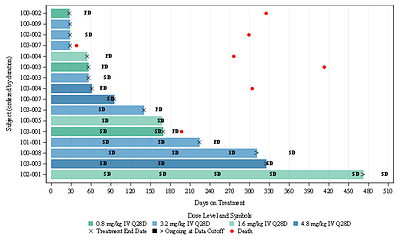
At the data cutoff date of September 1, 2026, 10 of 14 efficacy-evaluable patients, or 71.4%, achieved stable disease as their best overall response by investigator assessment. In the context of a first-in-human, dose-escalation study enrolling patients with advanced, heavily pretreated cancers, the Company believes the consistency, breadth, and durability of disease control observed thus far are promising and warrant continued clinical evaluation.
The disease control rate was 57.1% (95% confidence interval, 28.9% to 82.3%) at Cycle 3 Day 1 and 35.7% (95% confidence interval, 12.8% to 64.9%) at Cycle 6 Day 1.
The durability of responses was also notable. Six of 14 efficacy-evaluable patients were progression-free at three months, three of 14 at six months, and three of 14 at nine and 12 months. Together, these findings show that the efficacy signal was not limited to a single assessment and included prolonged disease control in a subset of patients.
As of the September 1, 2026, a total 98 doses have been administered. In this pre-specified data snapshot, TTX-MC138 demonstrated an acceptable tolerability profile in subjects with advanced solid tumors. No dose-limiting toxicities were reported, no treatment-emergent adverse events led to treatment discontinuation, including the highest evaluated dose level of 4.8 mg/kg. Of note, administration of TTX-MC138 for over a year was well tolerated and not associated with any dose-limiting toxicities.
“The updated efficacy findings are highly positive and clinically meaningful for an early dose-escalation study in a heavily pretreated, heterogeneous advanced solid-tumor population,” said Daniel Vlock, M.D., Medical Consultant for TransCode Therapeutics. “A 71% stable disease rate, disease control extending through six months, and three patients remaining progression-free at twelve months collectively demonstrate a compelling and durable signal of antitumor activity. Importantly, these efficacy findings were observed alongside continued tolerability and no reported dose-limiting toxicities, supporting further evaluation of TTX-MC138.”
Post-hoc Growth Modulation Index (GMI) Analysis Further Supports Clinical Benefit
The Growth Modulation Index (GMI) was calculated to further document the activity of TTX-MC138. GMI compares the progression-free survival achieved on study treatment to that achieved on the patient’s most recent prior systemic anticancer therapy. A GMI greater than 1.3 is generally considered evidence of meaningful clinical benefit. In this analysis, 6 of 15 evaluable patients (40%) achieved a GMI greater than 1.3, indicating that treatment with TTX-MC138 resulted in at least a 30% longer progression-free interval than that achieved with the patient’s immediately preceding therapy. Notably, several patients demonstrated substantially greater extensions of disease control relative to prior treatment, providing additional evidence of antitumor activity in this heavily pretreated population.
Exploratory Biomarker Findings Support Biological Activity
Exploratory RNA-sequencing analysis of peripheral blood identified treatment-associated, target-specific immune effects without major dysregulation of the global immune landscape. The analysis showed encouraging on-treatment increases in an antitumor cytokine signature and dose-dependent immune effects, including cytotoxic effector activity and increased monocyte and M1-associated inflammatory activity. Patients with stable disease showed higher B-cell and monocyte fractions and enrichment of cytotoxic, phagocytic, and Type I interferon programs compared with patients with progressive disease. These exploratory findings provide orthogonal biological support for the clinical efficacy observations and are consistent with TTX-MC138 engaging antitumor immune pathways. Given the small sample size, the biomarker findings are hypothesis-generating and require confirmation in larger studies. “The alignment between the highly positive clinical disease-control findings and the exploratory transcriptomic evidence is particularly encouraging,” said Zdravka Medarova, Ph.D., Co-founder and Chief Scientific Officer of TransCode Therapeutics. “The data show treatment-associated activation of multiple arms of antitumor immunity and biological features that distinguish patients with stable disease from those with progressive disease. This convergence of clinical and biomarker evidence strengthens the mechanistic rationale for targeting miR-10b and supports advancement of TTX-MC138.”
“These updated findings substantially strengthen our confidence in TTX-MC138,” said Philippe P. Calais, Pharm.D., Ph.D., Chairman and Chief Executive Officer of TransCode Therapeutics. “The breadth and durability of disease control, together with an acceptable tolerability profile and supportive evidence of biological activity, provide a strong foundation for the next stage of development. We are evaluating dose-expansion strategies designed to confirm activity in selected cancers and molecularly defined patient populations.”
TransCode expects to incorporate the updated clinical findings into a clinical study report addendum and to continue evaluating safety, pharmacokinetics, pharmacodynamics, and antitumor activity.
About TransCode Therapeutics
TransCode Therapeutics is an immuno-oncology and targeted cancer therapy company with a focus on treating advanced malignancy. The Company’s lead therapeutic candidate, TTX-MC138, is focused on treating metastatic tumors that overexpress microRNA-10b, a unique, well-documented biomarker of metastasis. In addition, TransCode has a portfolio of other first-in-class therapeutic candidates designed to mobilize the immune system to recognize and destroy cancer cells.
About TTX-MC138
TTX-MC138 is a first-in-class therapeutic candidate designed to inhibit microRNA-10b, or miR-10b, a microRNA widely believed to be critical to the emergence and progression of many metastatic cancers. TransCode’s Phase 1a first-in-human clinical trial achieved its primary safety endpoint and is currently being evaluated in a Phase 2a clinical trial targeting ctDNA-positive colorectal cancer patients following curative-intent treatment.
Forward-Looking Statements
This release contains “forward-looking statements” within the meaning of the Private Securities Litigation Reform Act of 1995, including, without limitation, statements concerning the timing, conduct and results of TransCode’s Phase 1a and Phase 2a clinical trials, statements concerning the therapeutic potential, consistency, breadth, durability of disease control of and responses to TransCode’s TTX-MC138 and other therapeutic candidates. Any forward-looking statements in this press release are based on management’s current expectations of future events and are subject to a number of risks and uncertainties that could cause actual results to differ materially and adversely from those set forth in or implied by such forward-looking statements. These risks and uncertainties include, but are not limited to: the risks associated with drug discovery and development; the risk that the results of clinical trials will not be consistent with TransCode’s preclinical studies or expectations or with results from previous clinical trials; risks associated with the conduct of clinical trials; risks associated with TransCode’s financial condition and its need to obtain additional funding to support its business activities, including TransCode’s ability to continue as a going concern; risks associated with the timing and outcome of TransCode’s planned regulatory submissions; risks associated with obtaining, maintaining and protecting intellectual property; risks associated with TransCode’s ability to enforce its patents against infringers and defend its patent portfolio against challenges from third parties; risks of competition from other companies developing products for similar uses; risks associated with TransCode’s dependence on third parties; and risks associated with geopolitical events and pandemics. For a discussion of these and other risks and uncertainties, and other important factors, any of which could cause TransCode’s actual results to differ from those contained in or implied by the forward-looking statements, see the section entitled “Risk Factors” in TransCode’s Annual Report on Form 10-K for the year ended December 31, 2025, as well as discussions of potential risks, uncertainties and other important factors in any subsequent TransCode filings with the U.S. Securities and Exchange Commission. All information in this press release is as of the date of this release; TransCode undertakes no duty to update this information except as required by applicable law.

 View original content to download multimedia:https://www.prnewswire.com/news-releases/transcode-reports-continued-disease-stabilization-and-extended-treatment-duration-with-ttx-mc138-in-ongoing-phase-1a-clinical-trial-follow-up-302890556.html
SOURCE TransCode Therapeutics, Inc.


